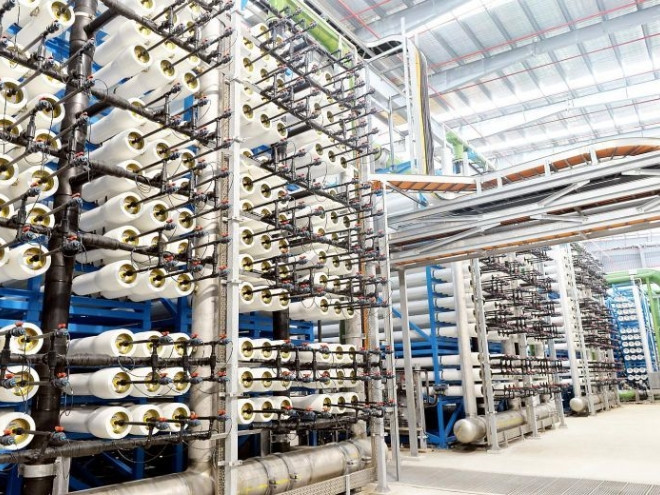
Reverse osmosis membrane types
| Type | Working pressure | Applications | Advantages |
|---|---|---|---|
Low Pressure RO |
5–15 bar73–218 psi | Drinking water treatment, residential and commercial systems, light industrial applications. | High energy efficiency and lower operating cost. Ideal for energy savings without compromising water quality. |
Standard Pressure |
15–30 bar218–435 psi | Well water and surface water desalination, drinking water systems and commercial applications. | Excellent adaptability and efficiency. Versatile option for multiple water treatment needs. |
High Pressure RO |
30–70 bar435–1,015 psi | Seawater desalination and heavy industrial applications requiring high removal of salts and contaminants. | Designed for high-salinity water. Require more energy and higher operating costs. |
Ultra High Pressure |
70–120 bar+1,015–1,740 psi+ | Extreme seawater desalination and specialized applications requiring maximum salt and contaminant reduction. | Highest salt rejection capacity. Essential where the highest water quality is required, despite high energy consumption. |
Regulatory framework and sources
The ranges and classifications we apply for each type of water are based on the Chilean regulatory framework, administered by the Chilean National Institute of Standardization (INN), and on internationally referenced agronomic and industrial technical guidelines.
Water for Agricultural Irrigation
This standard sets the official acceptable pH range between 5.5 and 9.0.
The conductivity thresholds (<750, 750–1,500, 1,500–3,000, >3,000 μS/cm) and their use restrictions are aligned with the salinity criteria of the United States Salinity Laboratory (USSL) and the FAO Water Quality for Agriculture manual (FAO Irrigation and Drainage Paper No. 29), which is the international standard that NCh1333 adopts to interpret the osmotic effects on plants.
Drinking Water (Human Consumption)
Sets the mandatory official pH range between 6.5 and 8.5.
Sets the maximum limit of Total Dissolved Solids (TDS) at 1,000 mg/L, which in Chilean distribution networks is normatively equivalent to a ceiling of electrical conductivity of approximately 1,500 μS/cm (based on an average conversion factor of 0.65–0.7). Beyond this threshold, the water is considered unfit due to organoleptic considerations (taste).
Industrial Water (Processes and Boilers)
Unlike drinking or irrigation water, industrial water is not governed by a single health law, but by the mechanical requirements of the equipment. The general recommendation to keep feed water below 500 μS/cm (and with controlled pH) aims to prevent exceeding the saturation limit of critical compounds such as silica (SiO₂) and calcium carbonate (CaCO₃).
Water for Recreation (Vacation Homes / Resorts)
Sets the official pH range between 6.5 and 8.3 for the sole purpose of avoiding epithelial or ocular irritation in bathers and safeguarding the effectiveness of sanitary disinfection processes.